The Go-To Aesthetic Clinic
in Gangnam, Seoul
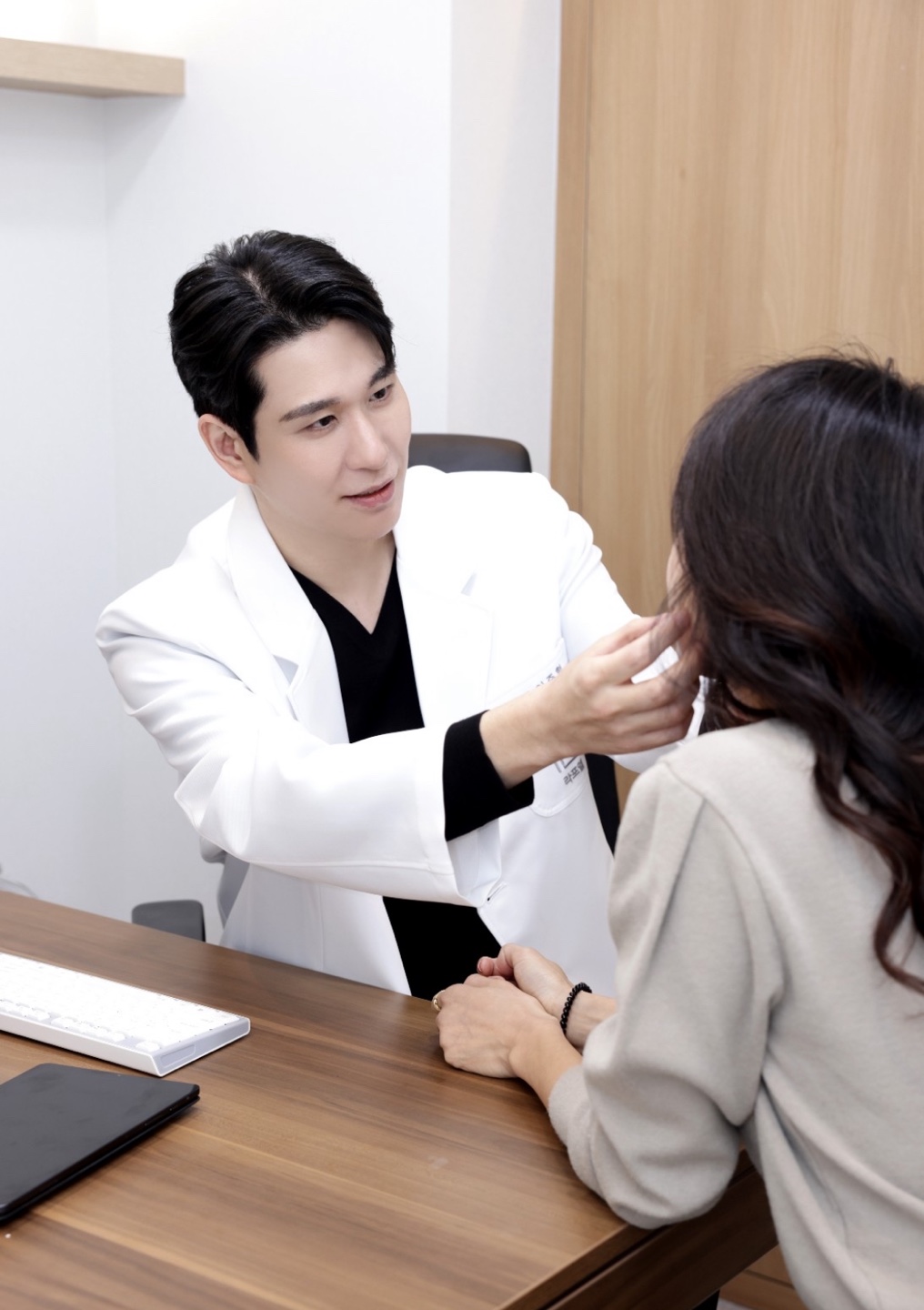
In Gangnam, Seoul, there is a clinic that didn’t grow through flashy advertising — it grew through word of mouth, one satisfied patient at a time.
They say: “After getting fillers at Rappoel, my smile looks completely natural.”
They also say: “After the ultrasound lifting treatment, my face really looks tighter.”
Today, I want to share why so many patients travel specifically to Gangnam to visit Rappoel. What makes our filler injections and ultrasound lifting treatments different from the rest?
Part 01 · Dermal Fillers
Many patients who come to Rappoel have previously had filler injections elsewhere — some ended up with a stiff face, some experienced filler migration when smiling, and some found that the results simply didn’t last.
They ask me: Doctor, are dermal fillers actually safe?
My answer is: Fillers are safe. Safety depends on the practitioner’s technique.
Layer-by-Layer Injection for Natural Expressions
Patients often come in saying: “Doctor, I want to fill my nose” or “I want to fix my nasolabial folds.” I understand this instinct — you see a problem and you want to fix it.
But at Rappoel, I prefer not to jump straight into treatments. Instead, I ask: What concerns you the most? How do you want to look?
Because the quality of a filler injection isn’t about which area you treat — it’s about whether your face looks more harmonious afterward. This has been my core philosophy throughout years of filler practice.
Why is layering so important? Because the facial muscles are highly active — when you smile, frown, or talk, these muscles are constantly moving. If filler is placed in the wrong layer, it gets displaced by muscle activity. This is what causes the “migration” and “stiffness” that people worry about. But when the correct layer is chosen, the filler stays precisely where it belongs, regardless of expression. This is the most important lesson I’ve learned from years of injection practice.
Dynamic Assessment — Movement Matters More Than Stillness
The result of a filler injection shouldn’t only look good when you’re still. You may be sitting quietly at the clinic, but in daily life, you’re constantly talking, smiling, and making expressions.
A beautiful face should look natural in every expression. If it only looks good in a static pose but falls apart when you smile, that’s not a successful injection.
Before every injection, I ask patients to perform a few movements — smile, talk, frown, raise their eyebrows. Under different expressions, the soft tissue of the face moves in different directions and at different amplitudes. Understanding these dynamics allows me to choose injection points that maintain harmony during movement.
The best filler result is when your friends think you “look great” but can’t pinpoint what changed. They shouldn’t be able to tell you had anything done — they’ll just notice you look refreshed and vibrant. That’s the standard we pursue: beauty so natural it’s invisible.
Multi-Angle Aesthetic Design — Refined from Every Perspective
Many people only consider the front view when getting fillers. But the face is three-dimensional — others see you from multiple angles: front, side, and 45 degrees.
My approach is to analyze the face from three perspectives: front, side, and 45-degree angle. Where is the deficiency? How much volume is needed? Is it a lack of skeletal support, soft tissue loss, or both? Only with a clear assessment can the injection be truly effective.
Part 02 · Ultrasound Lifting
Now let’s talk about ultrasound lifting.
At Rappoel, our ultrasound lifting treatments are just as popular as our filler injections. Many patients have tried it elsewhere with underwhelming results — or experienced excessive swelling and prolonged downtime.
They ask: Does ultrasound lifting actually work?
Precision Energy Control — Not Just “Filling in the Grid”
Ultrasound lifting works by delivering focused ultrasound energy to stimulate contraction of the SMAS layer, achieving a lifting and tightening effect. But the same device in different hands can produce vastly different results.
The key factors: Is the energy delivery precise enough? Is the depth control accurate?
At Rappoel, we have three core commitments for every ultrasound lifting procedure:
Ultrasound lifting and filler injections may seem like two separate treatments, but they’re actually complementary. Ultrasound tightening addresses loose skin while fillers restore lost volume — together, they deliver true facial rejuvenation. That’s why so many patients who try our ultrasound lifting come back for fillers as well.
Part 03 · The Combined Protocol: Lifting + Fillers
Many patients ask: Doctor, should I do ultrasound lifting or fillers first?
My recommendation: Ultrasound lifting first for tightening, then fillers for volume restoration.
The reasoning is straightforward: after ultrasound lifting, the skin and SMAS layer contract, giving the practitioner a clearer picture of where volume is needed and how much. If fillers are done first, the heat from ultrasound may accelerate filler metabolism, reducing longevity.
Why Choose Rappoel?
Frequently Asked Questions
Q: Will fillers make my face look wider?
A: This is the biggest misconception. A well-done filler result creates “enhanced definition,” not puffiness. The key is dosage and layer selection — I always prefer precise, conservative amounts, adjusting in multiple sessions rather than overcorrecting in one go.
Q: I’ve heard fillers can migrate. Is that true?
A: Migration happens when filler is injected into the wrong layer — one where facial muscles are highly active. At Rappoel, our “Three-Layer Injection Technique” combined with “Dynamic Expression Assessment” ensures that filler is anchored in the correct position and resists displacement even under muscle activity.
Q: How long before I see results from ultrasound lifting? What’s the downtime?
A: Results gradually appear over 1–3 months as collagen regenerates. Mild redness and swelling may occur post-treatment but typically subsides within 1–2 days without affecting daily activities.
Q: Can I do ultrasound lifting and fillers on the same day?
A: We recommend doing ultrasound lifting first, then waiting 1–2 months for the skin to tighten before adding fillers for optimal precision. However, spacing the two treatments apart is also perfectly fine.
A Message from Our Director
Fillers aren’t magic, and ultrasound lifting isn’t a cure-all. Effective facial rejuvenation comes from the practitioner’s experience, clinical judgment, and genuine care for each patient. At Rappoel, I maintain a strict 1:1 dedicated physician system — from the moment you walk through our doors to the moment you leave with a satisfied smile, every step is handled personally by me. My goal is simple: every patient should leave looking more harmonious and more youthful than when they arrived.